
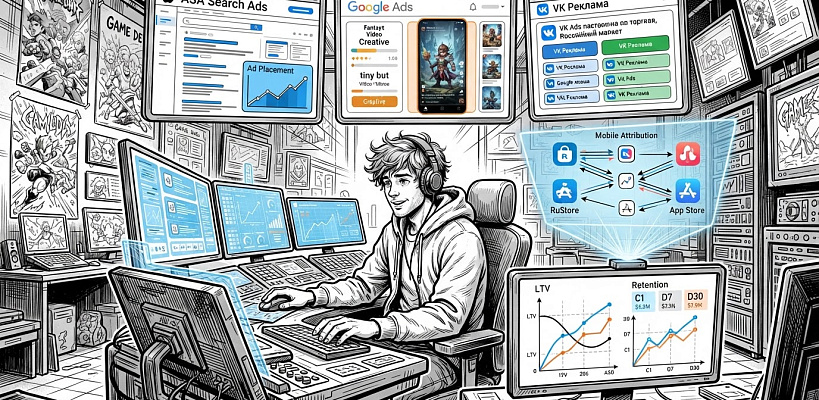

Market and Limitations of 2026: What Has Changed for Indies in App Store, Google Play, and RuStore
In 2026, independent teams have to build traffic acquisition strategies under "hard" privacy on iOS, the mature Android Privacy Sandbox (PPA) model, and inventory fragmentation. This is not a reason to abandon paid UA — it is a reason to narrow down the channel set to those where you can control the quality signal from day one. For indie games, three things are critical: predictable install cost without boosting brand queries, a fast creative testing cycle, and LTV measurability by C1/D7/D30 with limited data.
App Store and ASA: Apple Search Ads remains a key conversion channel from intent, but the auction has become more expensive. In Advanced mode, extended postbacks via AdAttributionKit are available with aggregation of D7–D30 events through Private Click Addition; field limits are strict, deduplication is mandatory. SKAdNet v5+ is effectively displaced by the AAK/AdServices ecosystem: campaign identifiers are truncated, conversion value must be passed aggregatedly, and optimization windows shift towards weekly cohorts. Auto-strategies are stable only when purchase volume exceeds the model stability threshold on a weekly basis — otherwise, fix bids manually and segment keys by intent ("high-intent brand/high-intent generic", long-tail). Indie teams should start with narrow keyword groups within their niche (roguelite/deckbuilder/puzzle-core), avoiding broad categories.
Google Play and Inventory: Attribution Reporting API with PPA summation is enabled by default. Protected Audiences bring players for retargeting within the auction, while third-party MMPs support event-level reports with noise and delays. DV360/VRC cover YouTube Shorts, partner Reels-clones, and in-app Rewarded; UAC has evolved into an eCPA model requiring high-quality retention signals (CPI takes a back seat). Practice shows that optimizing for the first purchase or registration yields a smoother learning curve than pure installs. Consider regional specifics of Google Play billing: tax forms, local payment methods, and refund policy requirements affect checkout CR.
RuStore as the core of PC/mobile RF: The platform has become a mandatory point of presence for mobile purchases in Russia thanks to VK Pay/SberPay/Mir and built-in analytics. The attribution scheme relies on the store's own postback rules supporting click/view windows up to 7 days; server-side events about purchases and subscriptions are supported. Moderation policies are stricter regarding income promises, "before/after" cases, and misleading metrics. The platform's advantage lies in native game card formats, editorial picks, and thematic showcases that provide cheap reach if you prepare RUS materials: screenshots with readable Cyrillic UI, a localized trailer up to 15 seconds, and a short description page with clear genre USPs.
Vertical Video Inventory: Short videos dominate, but the rules are tougher: labeling AI-assisted content, banning synthetic reviews, and mandatory disclosure of in-game mechanics without exaggeration. TikTok One simplified the production of short clips, however, the price for attention has risen. In practice, audiences burn out in 48–72 hours, so rotation of hook/message variants must be daily. The best results are shown by combinations of UGC-style + demonstration of the core-loop within 3 seconds, large-font subtitle headlines, and a final offer consisting of exactly one tap.
Metrics and Budgeting: Focus on a payback approach instead of Day-0 ROAS. Working benchmarks for hyper-casual/core-indie: target C1 ≥ 35–45% Day 1 retention of your benchmark niche; D7 revenue/cohort should cover media spend by day 14–21; D30 forms the real ceiling for rates. Maintain two reporting stacks: operational (noisy daily signals, early stopping of losing tests) and accounting (weekly cohorts with noise smoothing). Calculate incrementality separately: exclude organic cannibalization of ASA brand using geographic split-tests and evaluate lift on Retention/Purchase among exposed vs holdout groups.
Launch Pipeline: Week 0 — tracking, economy events, basic deep linking, test payments. Week 1 — manual bid control, aggressive placement cleaning, freezing networks with fraud share > 10%. Week 2 — scaling working hooks, transferring budget to sources with better qualified user costs (those who completed the tutorial and performed a micro-goal). Week 3 — enabling auto-budget management rules based on weekly-payback, preparing a second package of creatives for audience fatigue.
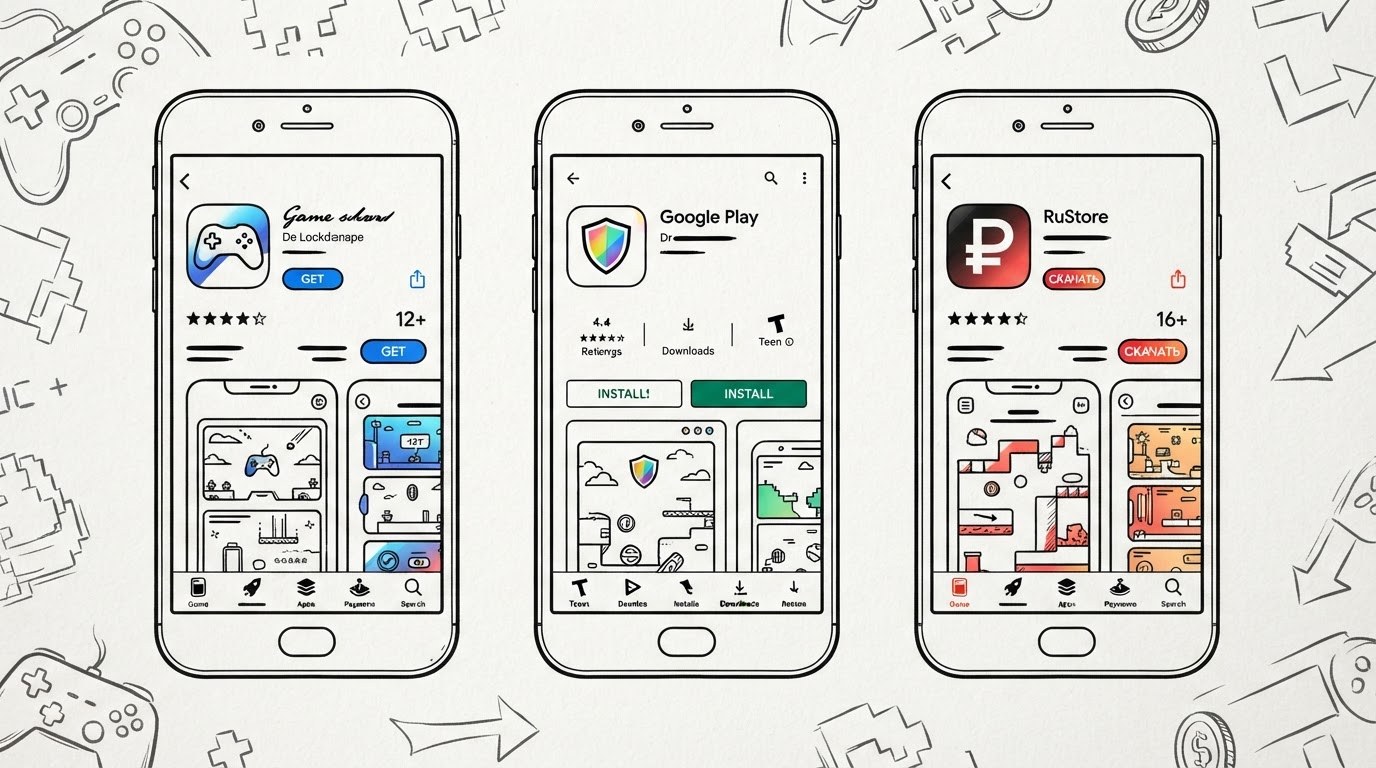
Tracking Architecture: AdAttributionKit, SKAN and MMP; Server-Side Events and Deduplication
In 2026, attribution for indie games is built around three pillars: native privacy schemes (AdAttributionKit on iOS, current SKAN profile), a single Mobile Measurement Partner (MMP) as the "single source of truth," and an event-driven backend with mandatory deduplication. The goal is not just to catch a click, but to collect comparable signals for ASA, Google Ads, and VK Ads so that optimization relies on the same LTV C1/D7/D30 metrics.
Native platform base. On iOS, AdAttributionKit paired with your SKAN profile remains key. Keep the profile version up-to-date according to App Store requirements for reporting windows and conversion aggregation. Configure three postback windows with correct value mappings: primary registration/onboarding → micro-economics of the first session (C1); early engagement and mechanic learning (D1–D3); sustainable retention and first purchase or subscription (D7+). For In-App Events in Apple Search Ads, use IAE postbacks without user identifiers, grouping events by semantic clusters, otherwise the algorithm will overfit to noise.
On Android, the baseline layer is provided by Play Install Referrer along with advertising IDs where users haven't reset them. Simultaneously, enable the Attribution Reporting API via supported network SDKs: this is the source of aggregated reports on clicks/impressions and conversion events with differential privacy. In RuStore, focus on its post-install attribution scheme with tokenized events from the official store SDK and cross-reference it with your UA network data.
The role of MMP. A unified MMP removes the headache of normalizing macro-networks, priority rules for click/view-through, viewability time-outs, and lookback windows. Choose a partner with ready support for AdAttributionKit, Conversion Hub value mapping, integrations for ASA Advanced Mode, Google App/OAC campaigns, and the VK Ads cabinet. It is critical to have predictive modeling for missing data from SKAN-like schemes and transparent confidence status for every optimization transaction.
Server-side events and quality contract. D7/D30 optimization requires reliable S2S tracking of purchases, subscriptions, and retention. Establish a strict contract:
- Idempotency of event_id + platform_transaction_id, TTL-based deduplication for 48–72 hours.
- Normalized currencies and revenue fixation moment based on the user's server time.
- Separate flags for trial_started/conversion/cancellation/renewal, plus cancellation reason if available.
- Cohort control by First Open Date (FOD), not payment date.
- Versioning of the events.json schema and CI validation of payloads before releasing the build.
For web flows regarding registration/account creation, apply Enhanced Conversions for Web analogs with hashed PII signals only where the network permits; otherwise, rely on first-party context and gap-filling models within the MMP.
Deduplication between networks and stores. Deduplicate twice: intra-network (click vs view from one source) and inter-network (one user came from a TikTok proxy, but the store attributed it as organic). Rules are simple: prioritize paid click over view, shorter lookback beats longer, store-provided install wins over network claim during conflicts outside the valid window. Log conflict reasons into a separate analytics stream to catch creative anomalies and domain redirects.
Value conversions, not counters. Transmit normalized predicted value per event instead of binary flags everywhere the platform policy allows. For Early Access PC releases on Steam, build proxy-LTV through wishlist→purchase latency and refunds, connecting Valve’s Analytics Event Schema. On mobile, calibrate models every 7 days on fresh paywall tests, fixing changes in price-fencing and regional pricing.
Privacy manifests and consent. On iOS, keep Privacy Manifests for your SDK stack up-to-date, reflecting actual ID and file usage cases. Consent UI should be honest, fast, and bilingual RU/EN; save results server-side and pass consent status to the MMP before the first events. Without this, you will get truncated audiences and incorrect learning phases.
Tracking health monitoring. Monitor coverage rate installs-to-events, time-to-first-event p50/p90, share of modeled conversions, mismatch-rate stores↔networks, dedup-rejection ratio. Degradation signals: growth in organic duplicates after a major creative push, TTFA spike, drop in match-key rate in ARA/ARF reports. Have a fallback plan ready: backup S2S endpoints, local retry queue on the client, graceful degradation down to key monetization events.
The bottom line is simple: a unified natives+MMP+S2S scheme with hard deduplication turns disparate signals from ASA, Google Ads, and VK Ads into training material fit for purpose. This is the foundation for scaling budget without illusions or end-of-month surprises.
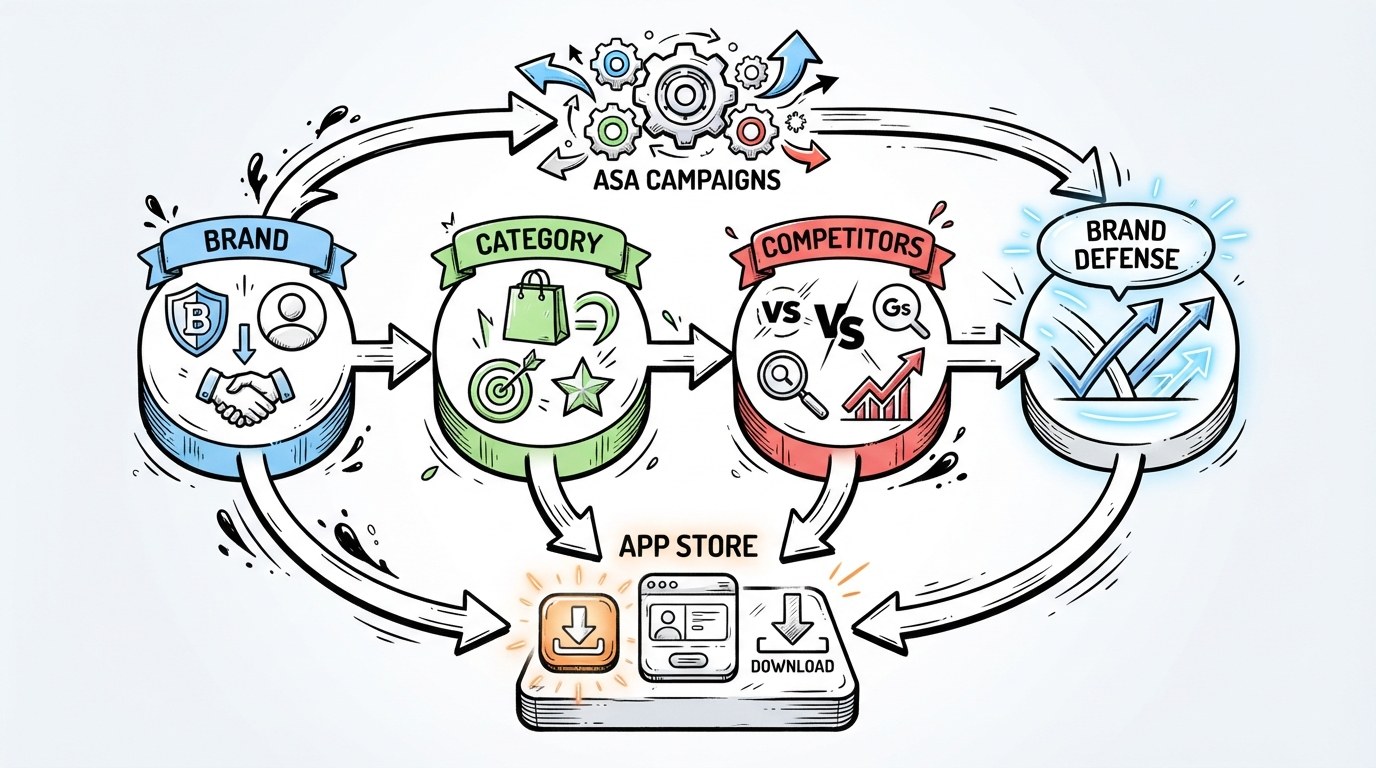
Apple Search Ads in 2026: Campaign Structure, Brand/Category/Competitors, Negative Keywords, and Brand Defense
In 2026, Apple Search Ads remains the most predictable source of motivated demand on iOS. For indie teams, the key to efficiency is not "dumping budget," but building disciplined semantics, protecting organic traffic, and gathering clean signals for optimization based on LTV C1/D7/D30. Campaigns are segmented by user intent; budgets are distributed from brand core to broad categories with strict control over intersections.
Account Architecture and Campaigns:
- Brand Core (Exact Match). Protecting your name, typos, and combinations like "name + genre." Bids are moderate but sufficient for Share >90%. A separate ad set for Latin/Cyrillic transliteration.
- Brand Discovery (Broad/Search Match). Captures long-tail queries around the brand. Add negative keywords aggressively starting day two based on search terms.
- Category Intent (Mid-frequency genres/themes). Examples: “roguelike deckbuilder”, “match 3 puzzle relaxing”, “city builder coop”. Segment by intent: core loop (‘merge core’), setting (‘cyberpunk’), mode (‘solo’).
- Competitor Conquesting (Exact and Broad). Only after stabilizing creatives and baseline economics. Split top-5 competitors separately: it makes bid management easier and helps exclude overlaps.
- Generic Broad as a test layer. Minimal budget, hard stop if zero conversions D1–D3.
Negative Keywords and Keyword Hygiene: Compile "universal negatives" (free cheats hack torrent mod adult), irrelevant platforms (“android”, “pc”), and other titles from similar genres. Use exact exclusion at the group level and phrase match at the campaign level where supported by the match type. Conduct Weekly Reviews: move converting queries from broad to exact ad groups, weak ones — to negatives. Monitor conflicts via Query Match Report and cannibalize yourself consciously only if it increases overall ROAS without eroding organics.
Cost-Efficient Brand Defense: Keep bids high enough to maintain Impression Share above the seasonal dip threshold (usually 85–95%). Enable Creative Sets for specific search topics: PvP screenshots for "arena shooter", cozy camera angles and meta for "idle sim". Use Custom Product Pages (CPP) and deep links: the landing page should continue the query formulation, reducing bounce rate and accelerating FTUE. Track the share of organic duplicates: if the user would have come anyway, lower the bid or pause during certain times of day.
ASA Creatives 2026: Cut App Preview videos up to 30 seconds into semantic hooks 0–2 / 2–6 / 6–12 seconds: cycle promise → depth demonstration → social proof (UGC snippets, review summaries). Sync the first line of Store Listing text with the core keyword. Export video additionally for vertical 9:16: part of the traffic sees previews in card scroll contexts. Test subtitle-intents directly over gameplay ("No Wi‑Fi? Play offline").
Indie Budgeting: The 60/30/10 rule between Brand Defense, Category, and Competitors. Within categories, allocate micro-bids by genre cluster and device platform (iPhone vs iPad often differ in CR). Start daily limit minimal ×3 relative to expected cost per install; increase in steps of 15–20% every 48 hours if tCPA/tROAS goals are met on the D3–D7 horizon. Geo-priority: Tier-1 is expensive but provides cleaner SKAN-like model signals; mix with Tier-2 for volume while maintaining target blended economy.
Signals and Measurement: Rely on Conversion Report and post-attributive cohort analysis. Link keys to retention/Ltv through internal player IDs and conversion-value values calibrated for your K-Factor windows. If neighboring ad groups compete—merge them or split by time/audience segment (e.g., new players vs returning users via All Users CPP segment). Check extension eligibility: Subtitle push, Awards shelf, show them for queries where they enhance relevance.
Anti-Pitfalls: Don't chase Rank Boost for ego metrics; control the incrementality of promo periods. Don't scale broad campaigns without a mature base of negative keywords. Don't forget about key localizations: an English-speaking group does not equal results in a RU-store interface. And most importantly—protect organics: any growth in paid share must bring net revenue uplift on D30, otherwise you are just renting your own users back at a higher price.
Google Ads P‑MAX/UAC Video: Feeds, Signals, Conversions, and Budget Management with Low Data Volume
In 2026, Google is unifying mobile UA around Performance Max and UAC Video. For indie developers, this is both a chance for scaling and a risk of "burning" the test overnight. The secret lies in disciplined signals, events, and budget management. Work using a three-layer principle: clean data → precise signals → controlled learning speed.
Layer 1. Noise-free conversions. Before launching, minimize false positives. Leave one target micro-conversion (e.g., completed onboarding or Level 1) as primary for optimization; keep purchase/subscription secondary until you have a stable CPI. Use aggregated attribution schemes from App Store/RuStore with postback delays of at least 24–72 hours to smooth out SKAN-like report volatility. In your MMP, enable missing conversion modeling only after calibrating on real first-week events. Check deduplication between the web funnel trial period and in-game events.
Layer 2. Feeds and signals instead of guessing. In P-MAX, feed a structured creative asset feed: vertical 9:16 videos lasting 6–15 seconds for Shorts and Reels, square 1:1 versions for Discovery, plus a set of headlines, descriptions, and calls to action. Do not mix genres within a single asset group—separate casual loops, midcore mechanics, and meta separately. Add audience signals: lookalike lists of players from your CRM, visitors to Steam/Wishlist pages, viewers of your trailers. Feed server-side first-party events via Conversion Adjustment to correct overvalued bot clicks. Manually exclude low-quality placements: children's channels, irrelevant UGC content, apps outside the gaming category.
Layer 3. Budget learns slowly. With small data sets, the rule is simple: daily budget equals 10–15 costs of the target micro-conversion, but no less than the threshold providing 30–50 events per week per campaign. During the first 72 hours, fix the tCPA/tROAS bid close to the historical D1 benchmark of your genre; automation needs a plateau, not a race downwards. Enable seasonal multipliers cautiously: +10–20% maximum, otherwise the model will jump into expensive inventory. If the install price jumps by more than 30% for two days in a row—pause learning, update negative placements, and restart with the same signals.
Creatives for algorithms. Algorithms need contrast in the first few seconds. Video structure: player pain hook (3 sec), core gameplay demonstration without UI (4–6 sec), session promise ("10 minutes — one bit of fun"), brand elements softly in the corner. Avoid small UI elements and long texts—the system will overlay subtitles itself, so give it clean audio and clear action. Prepare at least three concepts per audience cohort, rotate them every 5–7 days to avoid signal fatigue, but keep the offer core unchanged during one learning window.
Geography and stores. Separate RU/CIS campaigns from Global Tests. RuStore traffic requires a separate tracking package and a different payment funnel (SberPay/QIWI masks); C1 metrics there are usually higher, but D7/D30 retention might drop—account for this in Target ROAS. On iOS, continue relying on Broad Match text signals and cross-check results with Apple Advanced Commerce reports for another 14 days after spend.
Anti-fraud and hygiene. Enable Click Quality rules in the MMP, cut off geo-proxies and emulators at the partner level. Ask Google support to enable Strict Brand Safety level for the first two weeks of testing.
Once you stabilize the cost of the micro-event and see a predictable volume of 40+ installs per day without night spikes—increase the budget in steps of 15% every 48 hours. This way, the Learning Phase turns into a workhorse rather than a black hole for the budget.
VK Ads 2026: myTarget legacy, OK/VK feeds, InStream/OutStream, retargeting and look‑alike
In RU/CIS inventory VK Ads remains the most predictable channel for indie developers. The platform has consolidated inventory from VKontakte and Odnoklassniki, unified formats around vertical video, and strengthened algorithms based on in-app events through MMP attribution with server-side reconciliation. For studios without multi-million budgets, this is a chance to gather a stable volume of installs at a manageable price.
Where to buy in-feed: short videos up to 15 seconds are the core of procurement. The optimal setup: auto-placements (OK+VK), autoplay with sound off, subtitles/badges highlighting key benefits within the first 2–3 seconds. Supplement with static cards made from gameplay frames for cheap reach and USP testing. Separately use full-screen OutStream prerolls between content as an upper funnel layer; control frequency to no more than 2–3 impressions per user per day to avoid "burnout".
InStream video ads perform best for hyper-casual and casual titles with a clear reward cycle. Set a hook on the player's problem ("Running out of energy?", "RNG sucks?"), then present your mechanic as the solution and a strong CTA for the first action after installation. On mid-core projects, work by demonstrating progression or PvP moments rather than abstract slashers.
Audience segmentation. The basic backbone comes from auto-targeting on the "Games" interest optimized for the first session event. Next, enable contextual targeting by keywords from communities of related games, but strictly exclude your own communities and branded queries of competitors. Split retargeting: abandoned installs without launch, D1 players without tutorial, returning D7–D14 users without purchase. Offer each segment its own offer: progress block removal, newbie bonus, current battle pass.
Next-gen Look-alike. Gather source data from clean segments: completed tutorial, first session longer than genre median, soft currency purchase made. Use a sliding window of the last 90 days of data from the MMP so the model sees a fresh profile of paying users. Start with a 3–5% reach and expand step-by-step while maintaining target eCPI. Regularly update seed segments, otherwise quality degrades by the second week.
SKAN-like scheme for RuStore and App Store. Within the RF, RuStore Ads SDK attribution plays a key role with postbacks for post-install conversion levels: passing gates A/B/C/D, registration, subscription, soft item purchase. Synchronize feedback windows with campaign settings: if the algorithm learns on the tutorial_complete event, ensure it is stably achieved by minute 3–5 of the session. For iOS, maintain parallel SKAdNetwork 5.x tracking with support for web-rendered creatives and correct conversion-value mappings: CV should reflect value progression, not just event occurrence.
Creatives for vertical format. Shoot native-first: place the game UI closer to the center of safe zones, avoiding overlap with social network system elements. Add micro-text over the frame about session duration and lack of mandatory donations. Test three angles: social status ("Top 1 arena"), utility ("Pass levels faster"), collecting ("Collect them all"). Close the roll with a store packshot rating ≥4.6 and a bonus icon — this raises transition CR.
Economics and frequency control. Aim for an LTV model where C1 ≈ 20–30% of forecasted D30 ARPU for your segment, with D7 payback within 14–28 days for casual/midcore. Enable auto-pause rules when CPV grows by more than 25% relative to the previous week's baseline. Separate VK Messenger placement separately — click intent is lower there, but it's cheaper for hypothesis testing. Monitor organic cannibalization share: spikes in branded search must be accompanied by net install growth, otherwise the channel acts merely as a reminder.
The bottom line is simple: collect a clean signal from the first minutes, scale VSL creatives in short iterations every 48–72 hours, protect frequency, and rely on event-based optimization instead of clicks. This turns VK Ads from noise generation into a sustainable UA source for indie games.
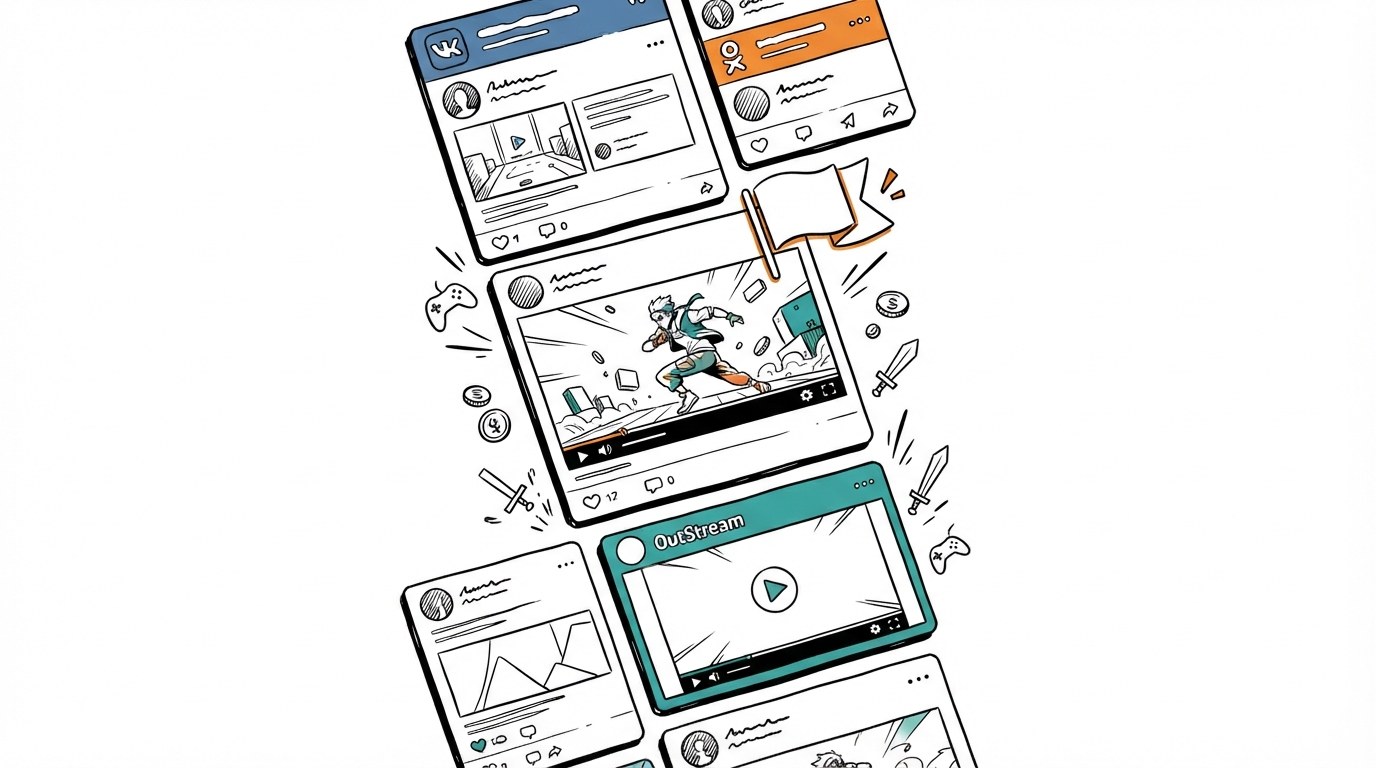
Creatives for Vertical Video: Hook–Gameplay–CTA, UGC Framework, Subtitles, and Platform Adaptation
In 2026, short formats are the primary source of cheap installs for indie developers. The algorithms of ASA, Google Ads (YouTube Shorts), and VK Ads look at retention in the first seconds, view-through rates to the CTA, and conversion to install. This means a creative needs a rigid framework, and production must be an assembly line of assets, templates, and rules.
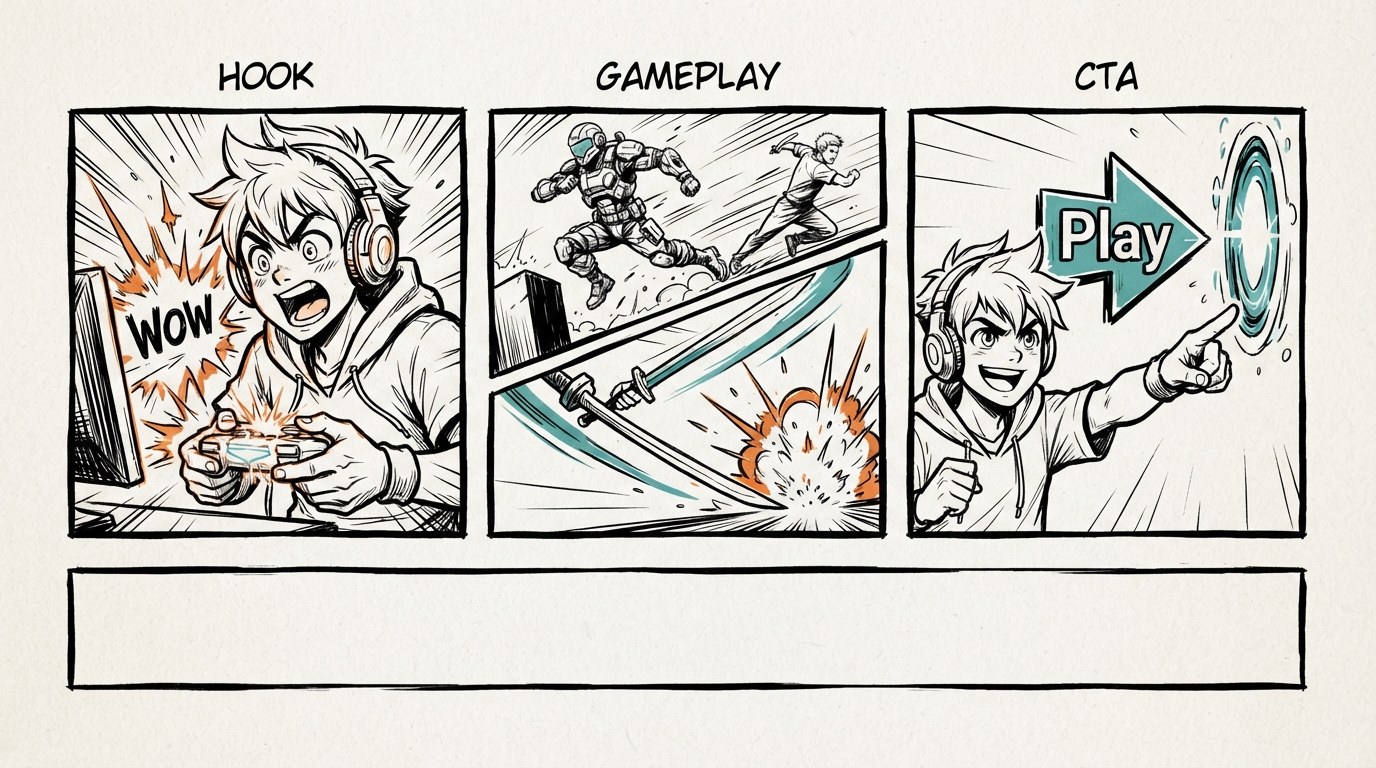
Video skeleton: hook within 1–2 seconds, gameplay core for 6–9 seconds, offer/CTA for 3–5 seconds. The hook hits on pain or promise ("This build carries without donation", "Cleared the run with my eyes closed"), not the studio's logo. Gameplay shows the solution through mechanics: a readable character silhouette, large UI, no cluttered background. The CTA is specific: "Claim the free bundle," "Open the PvP league." No abstract calls to action.
UGC framework instead of staged cinema. Simulating user-generated video remains consistently cheaper: smartphone zoom, slight shake, top panel cropped as if recording a screen. A face isn't necessary; hands and stock-voice reactions suffice. Keep three layers in frame: the game, an overlay hint (arrow/circle), and an offer banner at the bottom. Change only one variable between variants: hook text, target highlight color, or download button position in the store simulation.
Weekly pipeline. Monday — briefing the hypothesis matrix: 4 audience pains × 3 visual angles (win moment, fail reaction, macro-tactics). Tuesday — recording the core: 10 minutes of raw footage during a targeted session, capture native game FPS. Wednesday — assemble 12 base versions in After Effects/Premiere using .mogrt templates: unified timing for markers {hook}, {play}, {cta}. Thursday — auto-cutting 3–5 second loops for Spark Ads/TikTok One‑Page/VK Clips, export H.264/AAC 30 fps, MP4 container, Rec.709 profile but with above-average contrast—mobile loves sharpness. Friday — release tests, Saturday — clean up losers, Sunday — refine winners with new copy and voice-over.
Text and sound. Subtitles are mandatory: large, centered, max two lines, minimum filler words. Dynamic accents highlight key damage/timer numbers. Sound design revolves around three hits: swipe-hook, peak event in gameplay, accent before CTA. Music uses short loops without copyright risks: libraries with monetization clearance for Reels/Shorts, otherwise you'll get limited reach.
Platform adaptation. For Apple Search Ads Video Creative, the first 8–10 seconds need maximum informational density: the algorithm often cuts after the tenth. Don't hide the store interface—leave safe zones so the GET button isn't covered by your offer. In Google Ads on Shorts, avoid small text below 24 pt equivalent and rapid flashes—the system filters annoying content. In VK Ads, local memes, recognizable interface fonts, and explicit Cyrillic in the offer work better; plus careful mentions of CIS seasonal events without direct brand targeting.
Variation matrix. Maintain a bank of layers: 6 headline hooks, 4 types of target highlighting (color/glow), 3 narrator voices (neutral, energetic, calm), 2 editing rhythm versions (syncopated beat, steady pulse). Combinatorially, this yields dozens of unique videos from a single shoot day. Ensure each version changes exactly one layer—this way you identify the metric driver.
Metrics inside the creative. At the video level, watch VS retention at 1s/3s and the mass-swipe point. If drop-off reaches 50% before 2 seconds—rewrite the hook; if it crashes right after the first camera click—lighten the shot. Within campaigns, correlate the clip with keyword/interest: identical videos behave differently on queries like "idle" vs "auto-battler".
Compliance and store ethics. Do not draw non-existent rewards over real HUD elements, do not imitate iOS/Android system dialogues. RuStore and App Store are stricter regarding pseudo-system notifications. Use a disclaimer plaque of minimal size if demonstrating loot drop probability.
The conclusion is simple: whoever supplies clean, honest videos with a measurable single variable every week wins. The framework is ready—now it's decided by testing discipline and idea utilization speed.
RuStore as the Third Pillar: Ad Account, OneLink/Deep Links & Dynamic Links, UTM Discipline
In 2026, RuStore is not a "supplement" but an independent channel with predictable inventory and clear economics. For indie teams, it offers a rare combination of affordable CPC in Russia, fast moderation, and native integration with local payment scenarios. Stable UA here is built on three pillars: careful setup of the VK Ads account for placement in RuStore, fail-safe deep links via a unified router (OneLink or equivalent), and strict UTM discipline.
Account and Placements. In the VK Ads interface, select the goal "App Installs" and choose the RuStore platform alongside partner networks. Check store SDK versions at least once a month: current builds improve ad-attributed open tracking and deeplink route correctness after installation. Enable RuStore's SKAN-like private attribution scheme; align conversion windows C1/D7/D30 with your retention cycle. At the creative level, prioritize vertical 9:16 videos up to 15–20 seconds with a clear gameplay hook in the first 2 seconds. Localize texts for RU/CIS semantics, avoid promises outside the actual game loop — this reduces complaints and increases CR of targeted installs.
Deep Links and Routing. A unified link router is mandatory. Configure app:// schemes for deep navigation within the build, and web fallback for new users without the client. Maintain campaign context: a link from an ad must lead to the same content/event/community shown in the creative. For cross-store consistency, use dynamic links: they resolve the user at the moment of tap and deliver them where the probability of conversion is higher — directly into a match, seasonal pass, or bundle showcase. During release pipeline, keep a routing table next to UI assets so designers and QA can verify transitions together with marketers.
UTM Discipline. Without it, you will overpay for noise. Approve source naming (rustore_search, rustore_reco, rustore_video), campaign types (ua_scale, retarget_c1d3), contents (hook_02s, usp_economy), and terms (ASO keywords). Ban manual link edits in production: the generator should be part of the CI pipeline, tags are formed automatically from the campaign card. Validate regex templates when parsing logs from MMP/RuStore attribution, otherwise D7/D30 reports will start to "drift". Separate brand traffic from the store and pure performance — this makes incrementality calculation fairer.
LTV Economics and Anti-Fraud. The baseline comparison is eCPI against the median of your niche in the RU cluster. Control the share of organic cannibalization: enable geographic split-test holdout groups and a ghost booking window for organics (usually 24 hours). Monitor traffic quality by authorization rate, tutorial completion up to step N, and time to first match. If Day 1 retention falls below the threshold by 20% for more than a week — pause the placement, reshoot the first two-second hook. Anti-fraud relies on device signals, anomalous install-to-open speeds, and geo IP vs system language mismatch; keep threshold rules soft but automated.
ASO Interception inside RuStore. An ad brings interest, the product page converts. Synchronize visuals: event banner, screenshots, and the video's first frame must echo the campaign message. Metadata accounts for current autocomplete hints and the semantic core of the cluster. Respond to reviews within 24 hours — rating directly affects install price in recommendation blocks.
Operations and Scaling. Assemble a duty dashboard: spend, installs, C1/D7/D30 retention, ARPU/ad-IAP mix, payback days, view-through share. Set budget limits in steps of +20–30% every 24–48 hours if CP payback is stable. Run a separate re-engagement campaign for those who dropped off between D3 and D10: the deep link leads straight to the missed quest or reward — returning them there is cheaper than acquiring fresh blood.
The bottom line is simple: when you have a unified link system, consistent UTMs, and a disciplined chain of "creative—landing page—gameplay," RuStore turns into a steady, predictable stream of players. Indies win not by check size, but by iteration speed — and this stack provides exactly that better than anything else.
Traffic Economics: pLTV Model, Payback Period, C1/D7/D30 Benchmarks, and Cohort Control
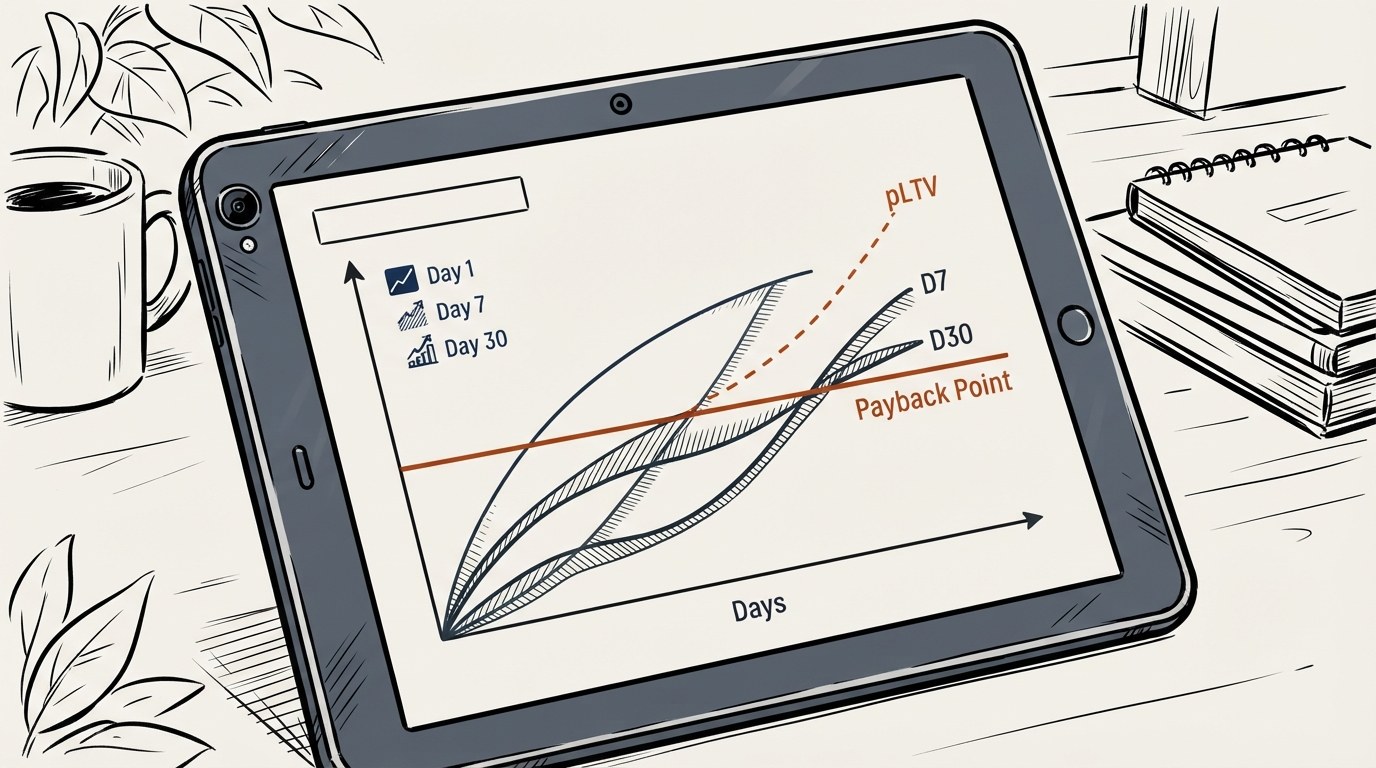
For an indie team, the unit economics of User Acquisition (UA) is not a table for the sake of a table; it is a system of emergency brakes. In 2026, auctions on ASA, Google Ads (UAC/Demand Gen), and VK Advertising operate under privacy-first attribution rules. This means decisions are made based on probabilistic LTV (pLTV), which is updated daily from the predictive model of your MMP or BI. The basic principle is simple: we only buy traffic where the median D30–D60 pLTV minus payment system fees leaves a target margin balance for content development.
Payback benchmarks depend on the genre and platform. For hypercasual projects, a Payback Period of 1–3 days is considered healthy; for casual games with meta-gameplay — 14–30 days; for midcore/niche PC titles on Steam, aim for 45–90 days due to high ARPPU and long retention tails. If by Day 7 you don't see at least 30–40% of the expected D30 pLTV in a new cohort, the campaign risks never breaking even without a radical revision of creatives or targeting.
Retention benchmarks are always contextual, but these ranges work as a starting map. Hypercasual: C1 40–50%, D7 12–18%, D30 4–7%. Casual puzzle/core-loop: C1 30–40%, D7 15–22%, D30 8–14%. Idle/Tycoon: C1 28–35%, D7 20–28%, D30 12–20%. Light RPG/Social casino: C1 35–45%, D7 25–35%, D30 18–28%. On PC via Steam, these values are usually higher on D30+ thanks to cross-save features and Workshop community tools. RuStore historically provides cheaper installs, but keep a close eye on inventory quality in-app networks: fraud eats payback faster than it seems.
Cohort control is built around three axes: channel–creative–geo-platform. Separate App Store / Google Play / RuStore / Steam within the same country because store commissions and player behavior differ critically. Within a campaign, fix build versions: patches change tutorial conversion and session economy, breaking cohort comparability. Compare the median and P25/P75 distribution of ROAS, rather than the arithmetic mean—it masks the heavy tail of unsuccessful segments.
A practical budget reallocation scheme looks like this. Day 0–1: evaluate IPM and the cost of a qualified start (completing onboarding before the first session > X seconds). Day 3: check micro-pLTV based on early payments and the pace of organic boost (ASA is especially sensitive to brand spikes after performance shots). Day 7: decide on scaling the adset/campaign if Retention and Cost per Qualified Event thresholds are met. Day 14–21: final bid calibration; if forecasted D30 ROAS is below goal −15%, mute the bundle and shift the budget to hypotheses for new videos.
Enable bottom protection: floor bids by channel, daily risk limit (no more than N% of the weekly plan for an untested segment), auto-stop upon anomalous CR drop exceeding 25% day-over-day. Separately monitor view-through noise from Demand Gen and TikTok-like placements—set attribution windows conservatively compared to iOS during the IDFA heyday, otherwise you'll overpay for branding instead of performance.
Finally, test discipline. Keep a hypothesis log with columns: metric problem, change (offer/CTA/hook length/social proof), expected delta-CVR/pLTV, verdict deadline. Creative fatigue sets in on day 4–7 of active spend; prepare rotation ahead of time. The one who wins economically isn't the one who found a single perfect adset, but the one who replaces burnt-out formats weekly before the eCPM-to-pLTV envelope starts dropping.
Leading Quality Indicators: IPM, View-Through, Session Quality, Anti-Fraud, and Anomalies
For an indie team in 2026, the main currency is time. You cannot wait for D30 Revenue for weeks to stop budget drain. Your UA system must rely on leading indicators that correlate with LTV C1/D7/D30 within the first hours after a click. If you are building acquisitions around ASA, Google Ads (UAC/Video), and VK Ads, the set of metrics will differ by platform, but the logic remains the same: capture player intent before conversion to purchase.
IPM as the primary creative filter. The IPM metric (installs per thousand impressions) remains the fastest marker of video or static appeal. In vertical videos for TikTok Placement via Google App Campaigns and native VK formats, target values depend on the genre. For hyper-casual games, the benchmark is higher; for mid-core strategies, a lower IPM is normal if the depth of the first session is high. Set up auto-rules: if during the first 5–10 thousand impressions the IPM falls below the segment threshold minus 2 sigmas, kill the adset without regret. Remember the law of diminishing returns: a sharp spike in IPM coupled with a drop in subscription CR often indicates "idle" audiences who download everything they see.
View-through attribution under control. View-through installs (VTA) are useful for evaluating brand reach but dangerous due to noise. In SKAN-like schemes from RuStore and updated postbacks iOS 18+, Apple Search Ads allows flexible VTA window configuration. 2026 practice: keep windows short (e.g., 1 hour) for performance channels and use incremental lift tests. Compare cohorts of only click-through installs against a hybrid model. If the gap exceeds your game's historical benchmark by more than 30%, there is likely attribution inflation caused by cheap Rewarded Video inventory.
Session quality instead of raw retention. Classic D1 Retention is deceptive, especially with aggressive onboarding. Track the combination of TPS (Tutorial Pass Rate), time to First Win Moment, and the percentage of players reaching Feature Unlock #1. In Firebase v12 and devtodev 2026 analytics, these events are marked automatically. Traffic health criterion: the median Time to First Core Loop for paid channels should not lag behind organic traffic by more than 15%. If UAC brings many quick exits (<10 seconds), the algorithm optimizes for empty clicks—cut low-quality placements like In-App YouTube Shorts.
Anti-fraud and behavioral anomalies. Modern install farms mimic humans. Use protection SDKs (e.g., current versions of Adjust Fraud Prevention or Singular) alongside server-side heuristics. Red flags for 2026:
- Too even distribution of time between events (lack of human jitter).
- Geo-mismatch between the clicking IP and device locale one minute later.
- Abnormally high percentage of devices with the same model/OS build in a narrow geo-slice.
- Simultaneous growth in IPM and drop in tutorial depth—a classic sign of motivated traffic disguised as in-app networks.
Set up real-time alerts. When two out of four flags trigger, pause the channel until manual BI log verification.
Economic calibration of early signals. Link operational KPIs to money. Derive the k_IPM_to_D7Revenue coefficient for each source. For example, historically every +10 points of IPM in ASA bring +4% to ARPU D7. As soon as the actual indicator deviates downwards, proactively lower the tCPA bid. This is critical for indies where daily budgets are limited: it is better to miss volume today than buy a toxic user base that crashes app store rankings due to poor funnel conversion rings.
The final check is simple: your dashboard must answer the question "Is the purchased user healthy?" before the accountant asks "Where is the money?". Leading indicators give you this right to make mistakes while they still cost pennies.
6-Week Launch Plan and Review: Test Calendar, Alerting, Build Releases, and Post-Attribution
A six-week cycle is the working standard for indie studios in 2026. It synchronizes with store release windows, SDK update frequencies (ASA iOS 18+, Google Ads App v24–25, VK Advertising API 7), and the data accumulation speed of SKAN-like schemes from RuStore/App Store. The sprint goal is to confirm the creative and targeting hypothesis within two weeks, stabilize CPI while maintaining IPM over the next two, and then scale up to the profitability ceiling based on LTV D30.
Weeks 1–2: Signal Calibration and "Clean" Test. Start only after locking a stable build without critical crashes (ANR level < 0.3% of sessions). Enable aggregation of Apple Ad Attribution v4 and Privacy Sandbox for Android analogues of TCF signals in your tracker. For ASA, create separate ad groups for Broad Match and Exact, excluding brand queries. In Google Ads, use UAC+ Performance Max with manual first-day audience signals: lookalikes from D1 payers, high-intent search themes from Console Insights. In VK Advertising, activate Advantage+ placements with priority on Shorts/VK Clips. Allocate budget as 40/30/30, daily balancing the share by the source-converter where IPM>=average +20%. Creatives should be vertical 9:16 videos with a hook ≤ 1.5 seconds, demonstrating the core loop by the fifth second; subtitles are mandatory. Check MMP postback latency at the network level (< 5 seconds); otherwise, optimization goes blind.
Weeks 3–4: Metric Stabilization and Traffic Quality Control. Move to the scaling phase only if gates are met: D1 retention ≥ genre benchmark − 10%, tutorial completion conversion ≥ 60%, ROAS D7 fund recovery ≥ 30% for casual or ≥ 15% for midcore FTUE. Enable a frequency cap no higher than 3 impressions/day per user and exclude purchasers for the first 24 hours to avoid burning margin on retargeting. Set up alerts: invalid traffic rate spike > 12%; install-to-event(C1) delay divergence > 3×median; ATT opt-in drop on iOS by more than 5 p.p. day-over-day. Upon auto-stop bidding trigger on an adset, immediately freeze the placement for 48 hours to check fraud patterns via your MMP's ML model. Release a hotfix build if degradation of first-time user experience longer than 200ms main menu load time is recorded.
Week 5: Controlled Scale and Cross-Platform Synergy. Shift budget into winning combinations of GEO × placements. In ASA, raise bids by increments of 10–15% every 12 hours provided eCPI remains ±5%. In Google, switch part of the inventory to Predictive Bidding toward target ROAS D7, but limit one source's budget share to a maximum of 35% of the total UA pot to avoid learning volatility. In VK, utilize creator whitelisting for short clips: this reduces banner blindness and improves view-through signals for algorithms. Launch a soft retargeting funnel for churn-risk segments (day 3 no session pushless) via in-app messages.
Week 6: Unit Economy Review and Pipeline Preparation. Gather the week 0 full-cycle cohort. Compare blended LTV C1/D7/D30 against the predictive model on your BI dashboard, accounting for revenue reporting delays from privacy-safe networks (up to 72 hours). Recalculate allowable CPIs: Target Payback Days = 18 for hypercasual, 45–60 for casual builder, 90+ for midcore PvP. Fixate the learnings library: offer map → best hooks length → optimal pacing beats grid. Prepare the backlog for the next cycle: updating Custom Product Pages iOS for new user pains, A/B testing web2app landing pages, integrating server-side purchase validation RuStore Billing API v3. Schedule the build hotfix release exactly between weeks 3 and 4 so tests run on an identical client.
This rhythm transforms chaotic buying into a manageable system: clear gates protect the bankroll, and weekly release points keep product quality synchronized with installation growth pace.